Friday, March 30, 2007

ROGUE ANGEL: DESTINY by Alex Archer

Destiny is the first in the new series Rogue Angel published by Gold Eagle--it came out in July of 2006--and the series promises to be both fun and entertaining.

Destiny is a fast read--the prose is smooth, the plot is tight and the characters, while not well developed, serve the storyline perfectly. Annja Creed is a terrific protagonist--she is beautiful, daring, intelligent and super cool. She reminds me a little of Buffy the Vampire Slayer mixed with Clive Cussler's Dirk Pitt. She will appeal to both men and women, and if Destiny is reflective of future series titles, Rogue Angel should be around for a very long time.

To read my entire review of Rogue Angel: Destiny on SFReader go Here.

To read a great interview with author Alex Archer on Realms of Fantasy go Here.

Tuesday, March 27, 2007

Leisure Set to Release Jack Ketchum's OFFSPRING

Leisure Books has become the leader in paperback horror. They have done it one author at a time: Richard Layman, Douglas Clegg, Brian Keene, Jack Ketchum, Graham Masterton and so many more I can't begin to think of them. Which brings me back to the point: Jack Ketchum.

Jack Ketchum is one of their better talents, and they have been doing a tolerable job of getting some of his older out-of-print titles back into print in affordable mass market paperback editions. Last summer they published Off Season, the summer before The Girl Next Door, and before that they brought She Wakes back into print. Not bad. Now we just need to get Jack to write a few new ones to go along with the vintage.

Fortunately, until Jack writes something new, we have his older work--much of which we, at least I, have never seen let alone read--and this summer, June to be precise, Leisure is scheduled to release Offspring. Offspring is the sequel to Ketchum's classic novel Off Season.

I haven't read Offspring, but I've heard about it. And I hear it rocks. At least I hope it rocks. I'll find out soon.

Monday, March 26, 2007

The New Destroyer

Good news on The Destroyer front. I found the Amazon listng for the new improved version of the old series. They have a new publisher--from Gold Eagle to TOR--and Warren Murphy is back in charge of what happens, when it happens and how it happens.
There have been rumbles among the fans about the last several (maybe a dozen or so) titles--apperantly they took Remo places he shouldn't have been--and Murphy plans to fix that. How? Pretending those particular novels never happened.
Guardian Angel is the first title in The New Destroyer, and is expected to hit bookstores May 1. TOR also plans to release some of the better of the older titles in trade paperback, three to a book.
I haven't read a Destroyer title since I was a teenager. I can even remember the where and the when. Early Nineties on the shore of a beautiful lake in the Uinta Mountains. Damn if I can remember the title, or even what it was about, other than the expected Remo ass-kickings and the always present sly humor. Great trip. Great book? Maybe. Just can't quite remember.
Hmmm. Time to try another? Or maybe just dust of the old Fred Ward Remo Williams VHS? Did I just admit I liked the movie? Damn. Sorry.

A David Goodis Review

Anyone who reads noir knows the name David Goodis. His work has been in and out of print so often it isn't difficult to find, but somehow the man remains elusive. His story is one of tragedy--much like the sad, seedy novels he wrote for the paperback houses in the 1940s, 50s and 60s. He died at the age of 49 after a long, quiet career as a paperback writer, in the same home he was raised in Philadelphia. To many he remains a master of the noir novel, but to read him is to see the world as something less than gritty, not to mention mean, nasty and very unfair. Maybe they are just the way Goodis viewed the world.

There is a terrific review of Goodis's novel Black Friday on Pulp Pages. It was written by G.L. Hauptfleisch, and it quotes Ed Gorman:

“'David Goodis didn’t write novels, he wrote suicide notes,' mystery writer Ed Gorman once wrote. 'He was a sad, suffering guy and he was able to get that sadness and suffering down on paper.'"

That pretty much sums up Goodis, and his writing. He is a little dark for me, but if you can get past the desperation, the poverty and the ills he portrays he was a pretty damn literate and entertaining writer.

Go Here to read the article/review.

Wednesday, March 21, 2007

RUNNING BLIND by Desmond Bagley

Bookgasm runs a weekly column called Bullets, Broads, Blackmail & Bombs written by Bruce Grossman I read faithfully--he writes about those old fashioned thrillers that told one hell of a story in about 200 pages. You remember those, don't you? The good old days of Alistair MacLean, Hammond Innes, Jack Higgins--before the bestseller list ruined him--and a bevvy of other talented writers who knew how to tell a story at breakneck speed and keep you thrilled the entire time.

Today Grossman has a small review of one of my favorite Desmond Bagley titles: Running Blind. Bagley wrote adventure and spy novels in--mostly--the Sixties and Seventies, and they were tough, raw, sparse and a hell of a good time. I can still remember reading Running Blind, I found it in an old paperback exchange and kept it in the glove box of my car for about a week. Everyday I would leave for work an hour early. It only took me fifteen to get there, so I had a good forty-five minutes to get lost in Bagley's world of hijinx, espionage and paranoia. I loved it.

Grossman sums up Running Blind perfectly: "I can’t stress how much of a blast this book is. If you’re a fan of this type of spy fiction, dig through your used stores for it. You won’t be disappointed at all."

You should read the review--maybe catch the one about Hopscotch by Brian Garfield as well, and then get your hands on anything Desmond Bagley. You won't regret it.

Go Here to read the review.

Monday, March 19, 2007

Jack Pot: A Few Lucky Finds

I have to be honest, I'm a poor student and the high cost of new books is often beyond my budget, which makes me a window shopper of the worst kind. The kind who buys only on special occassion. But yesterday I hit the motherlode! It wasn't a wide vein of gold or silver, but rather a table loaded with dozens of titles--new titles released in the past year--listed at 2 for $5.98. When I saw them my pulse quickened, my heart fluttered and that damn vein on my forehead began a morbid little dance. Hell, I probably even turned red from excitement. Maybe cut a few years off my life from the stress of surprise.

I found several titles I have wanted, but was too cheap to shell out hard currency for, including, Grave Descend by John Lange (a pseudonym for Michael Crichton), The Peddler by Richard S. Prather, The Guns of Heaven by Pete Hamill, Witness to Myself by Seymour Shubin, and Off Season by Jack Ketchum. These are all either Hard Case Crime, or Leisure titles. And they are all books I have wanted to read, or in two cases reread.

Woohooo!

Wednesday, March 14, 2007

Another Richard Laymon Cover

Okay, I've been meaning to do another cover art comparison post, but I haven't. Don't hate me bacuase I'm lazy. Please. So a faithful reader found and sent me the U.S. and U.K. versions of Richard Laymon's In the Dark. In the Dark is Laymon's best novel, by far. The only title that even comes close to its creepy visceral power is The Traveling Vampire Show--you know, the title Laymon won the Bram Stoker for.
The photos are a bit on the small side--my fault. Don't even think about blaming the faithful reader. And they are both cool. Real, real cool.
In the Dark


Tuesday, March 13, 2007

DEADLY BELOVED by Max Allan Collins

Good news on the Hard Case Crime front--they have just announced and released the cover art for their newest title--Deadly Beloved by Max Allan Collins. Deadly Beloved is an original title; something Hard Case should do more of, and it is different from their usual fare, in that the protagonist is a woman. The book sounds great, and the artwork is great. (see right)
Collins is the author of two previous HCC titles: Two for the Money and The Last Quarry. Two for the Money is a reprint of two early titles--Bait Money and Blood Money--featuring professional criminal Nolan. Nolan is Collins's homage to Richard Stark's Parker, and don't tell anyone, but I actually prefer Nolan to Parker. Wow. I feel like I just committed an act of heresy.
Two for the Money is my second or third favorite book HCC has produced, and I hope Deadly Beloved is pretty damn good, too. And speaking of Nolan, I figure it's about time HCC released a couple more--maybe publish them like the old Ace Doubles, back to back.
Cool, no?
Unfortunately Deadly Beloved isn't scheduled for release until December, 2007.
Go Here to visit Deadly Beloved's promotion site.

Monday, March 12, 2007

CREEPERS by David Morrell

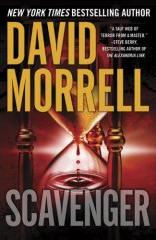
Today is the official release date for David Morrell's latest novel, Scavenger. I saw it in the local Barnes & Noble on Saturday, so I know it's available. I can't wait until I get my copy--I'm hoping SFReader gets a review copy. I'm preparing for Scavenger by rereading Creepers. I like it as much the second time as I did the first. This time I'm smart enough not to read it at night, before bed; the first time I read Creepers, it wound me up so tight I couldn't sleep. It made for a few long days at work. It was worth it, though. Read on for my September, 2005 SFReader review of Creepers. I'm especially proud of this review because it was featured on at least two websites including the Paragon Hotel site, which was the official website for the novel. Read on, and if you haven't read Creepers, read it very soon. Then join me in reading his latest novel, Scavenger.
David Morrell's latest novel Creepers defies categorization--it is part thriller, part horror, part crime novel, and every word drips with harrowing suspense. It is the story of Frank Balenger, a New York Times Sunday Magazine reporter who is doing a piece on "creepers" -- history and architecture enthusiasts who infiltrate abandoned buildings using caving and climbing gear. They take only photographs and leave only footprints.

The group Balenger joins to get a firsthand look at creeping is led by history professor Robert Conklin, and includes Vinnie Vanelli, a high school teacher, and graduate students Rick and Cora Magill. The target is the Paragon Hotel in Asbury Park, New Jersey. The Paragon was built and designed by hemophiliac Morgan Carlisle and has been closed since 1968. Carlisle was an enigmatic genius and shut-in who lived his life through the lives of his guests: he built an impressive grid of hidden passageways throughout the hotel to secretly watch his guests in their most intimate moments. He built the Paragon to hold secrets, and the urban explorers will discover them in frightening detail.

It begins with the expected: dark, spooky passageways; rooms filled with furniture and dust. It is an invasion of the past. The group walks into a time forgotten: the inhabitants long gone, most of them probably dead. It begins this way, but it is not long before everything changes. The expected becomes the unexpected when the group discovers they are not alone, and their unwanted company is far from friendly. It continues when they find the corpse of a long dead woman, and then it climaxes with a violent clash of psychological and physical warfare.

The images Morrell creates are haunting. He uses simple language to create the illusion of the hotel, of the past. "Vinnie opened the closet doors wider and showed them a Burberry raincoat, its wide lapels drooping, its tan belt hanging." The lives of forgotten guests fill the place, almost haunt it. While there are no ghosts, the evils are very real, very human, and very much alive--the prose, the story evokes the feeling of a haunting. Almost as if the hotel is alive, feeding off the images, the ghosts, and memories of the past.

This rich atmosphere is created with seemingly little effort. While it is powerful and real, the main thrust of the story is the action and terror the group members face as they make their way into the hotel. The secrets--those of the hotel and the explorers--are revealed slowly and terrifyingly. The action sequences are done so well your heart rate will rise. They are written with a stark and bleak realism. They do more than tell the story, they show it in clear detail: "An impact jolted him. He rolled, stopping on his back, and struggled to clear his lungs as water sprayed behind him. Rats scrambled over him."

Creepers is a novel that will keep you reading late into the night and when you finish it will stay with you. It, like the Paragon Hotel, is filled with images of the abandoned past. There is something wistful, almost sad and melancholy in its allusions to the dying and dead--all of us--to the forgotten who once lived, and even to those who never really did. Creepers is that rare novel that will scare the hell out of you, and yet make you ponder your own humanity. It really is that good.

Tuesday, March 06, 2007

"The Techno-thriller" by William F. Ryan

I've been in a nostalgic mood recently, at least so far as my fiction reading is concerned, and that nostalgia has led me back to the novels of my youth. Technothrillers, mostly. I have read a few in the last couple weeks and even checked a Tom Clancy novel out from the library--I gave up on Clancy back in 1991 with his voluminous, over-technical, and down-right boring, The Sum of All Fears.

In my Internet perusing I found an interesting article about technothrillers in general, and Tom Clancy in particular. It was published by the venerable Virginia Quarterly Review in the Winter 1993 issue, and was written by William F. Ryan. Ryan asserts that Clancy is the father of the technothriller--an argument he doesn't quite prove--and that technothrillers are less literature (something I could agree with) and more propaganda than anything. Mr. Ryan captures the essence of the technothriller well:

The stories ring with patriotic fervor and a Manichean discernment of good versus evil. You always know your enemies. You quickly spot the good guys. You know from the outset which side will win because destiny commands it....The plots and crucial sequences always rely on advanced technology for waging war.

Mr. Ryan makes the obvious link between technothrillers and science fiction, but he also makes a more subtle connection between the technothriller and western. It is a disparaging connection--they are simple, the characters less than believable and very generic--but an accurate comparison. They are both uniquely American and very much rely on the upright morale code of the outsider to save and support society.

But what type of story doesn't rely on the alienation of the protagonist? And while it is true both genres can be insipid and stupid at times, I think it is an over simplification and a disservice to both readers and writers alike to label an entire genre, or genres in this case, as not worthy of an audience. Is The Hunt for October a classic? No, but it was original and really pretty damn good. While it may be difficult to cultivate a potential classic from the technothriller field, there are a number of westerns that have reached beyond their genre and become bona fide classics: Shane by Jack Scheaffer, The Big Sky by A.B. Guthrie and many more.

Mr Ryan's views on the technothriller are interesting, but his analysis is skewed and biased; against genre fiction in general and military fiction in particular. In his final paragraph Ryan says:

What does all this say about the techno-thriller genre? Is it for fun and escape, or is it a bill of goods? Maybe it is both. Jules Verne couldn't be reached for comment. But I don't think he ever conceived a novel about science and propaganda.

I'm not sure propaganda can be removed from any art form, including literature. The authors biases, fears, hatreds and just about every other damn thing are bound to bleed into the storyline. It's who we are. A painter doesn't create a static, lifeless body, but they leave a portion of their humanity, their beliefs, on the canvas. Propaganda.

Why should a writer be any different? While we don't have to agree with the propaganda in any art form--and I certainly don't agree with the allegiance to authority, the inevitable wholesomeness of American culture and its war machine that most technothrillers espouse--it doesn't mean we shouldn't read it. Or enjoy it as a distraction. Instead it means we should understand what we are reading, what it means and its value as a vessel of perspective and morality. In other words, we should read critically.

Hell, I like technothrillers--at least the ones that can play out in less than 500 pages--and I don't support many of the ideas portrayed in them. I don't like violence. I don't think American firepower can solve much of anything. I have an aversion to authority, and I don't think the American military--or political system--is always right. But still, I like the books.

To read the article go Here

Friday, March 02, 2007

Books Covers--UK vs. USA (Richard Laymon)

I'm a sucker for book covers--the more interesting the better. Over the last few decades I've been an interested spectator of the changing artwork on different editions of the same novel. As a teenager I loved the work of Alistair MacLean (still do), and every time I chanced into a thrift shop I would look for a title or two. I wasn't looking for any new titles because I already had them all, but rather I was looking for new or different artwork from the titles I already had. I loved the Fawcett Gold Medal editions from the 1970s with their colorful covers and bold, lusty artwork.

It got me thinking. How are the US and British versions of the same titles different? I don't see many British books around here, but alas thanks to the Internet I can at least see their electronic images. So here we are. A comparison of a few Richard Laymon titles--both their US and UK cover artwork.

The first stop, Into the Fire, published in the UK as Glory Bus. I do like the UK title better because it fits the story better. I'll let you decide which cover is the best. The UK version is on the left and the US version is on the right.


The Lake


Mmm. Tough call, but I'm leaning--ever so slightly--towards the UK versions. They have more standard artwork--something you would see hanging on a wall--and less Photoshop photography. Although the US artwork is kind of cool in its surreal and seemingly haunted way.

David Morrell Interview at ITW

In the spirit of joyous celebration--David Morrell's newest novel Scavenger (check out the British Edition artwork to the right) will be released March 12. No less than ten days away. Heck, Amazon and BN.com have it in stock even as I type. But I digress--so, as I was saying...in the spirit of joyous celebration I have found, and linked to a terrific little interview David Morrell did for the International Thriller Writers' webzine, The Big Thrill. While the interview isn't long, Morrell does speak about Scavenger, his writing career, how he researches, and writing in general. It's well worth the read.

This is just a little nugget of what he said about Scavenger:

The primary emotion of CREEPERS is the claustrophobia of the hotel whereas SCAVENGER emphasizes agoraphobia and the overwhelming expanse of a mysterious valley with a sky so wide that the characters feel small and vulnerable.

Cool.
Go Here to read the interview

Monday, February 26, 2007

Black Evening by David Morrell

I've probably mentioned this before, but David Morrell has a new novel scheduled for release on March 12. Its title is Scavenger, and while it isn't a sequel to his Bram Stoker winning novel Creepers, it does feature the same protagonist. I've probably mentioned this before too, but what the hell--I can't wait! I'm counting the days: 14!

To liven things up around here, and maybe get you as excited as I am for Scavengers release, I'm going to reprint some old reviews I wrote for SFReader.com of Mr. Morrell's work. Maybe even post an original review or two as well. And so, here you are--enjoy!

Black Evening, written by David Morrell (Nightscape), is advertised as a collection “of dark suspense.” These stories represent twenty years of his best short works. They are a departure from his novels in that they concentrate on the horror of fear, rather than international intrigue. The tales range from the supernatural to the more realistic. They are dark and frightening. The stories are personally, honestly and intimately, introduced by the author. He explains the story, how it was written and why it was written. The stories stand well on their own, but with the addition of the introductions, the sincere explanations, they seem to take on new life: the life of their author, and very much the life of their reader. Morrell created them, but as you read them they will be yours, exclusively and alone.

Black Evening opens with the story “The Dripping.” It was Morrell’s first professional sale, and as he describes in the story’s introduction it was written shortly after he finished his novel First Blood. “The Dripping” is a story of loss. It is the story of a man who moves, with his wife and two daughters, into his childhood home. One evening he arrives home to a seemingly empty house, he calls out to his wife, to his daughters, but there is no answer. The only sound is constant and steady dripping. This story is horrifying. It, as are many of the stories in this collection, is written in first person and the narrator speaks with a sense of loss, fear and doom that adds to the gloomy terror that seeps through the narrative. It is the first story, but it sets the tone and mood for many of those that follow.

While all of the stories are well written and entertaining, a few of the more notable are: “The Beautiful Uncut Hair of Graves,” “Orange is for Anguish, Blue for Insanity,”—both winners of the prestigious Bram Stoker Award for best novella—“But At My Back I Always Hear,” “Dead Image,” and “The Dripping.”

“The Beautiful Uncut Hair of Graves” is odd because it is told in second person and present tense. I had never read a story written in second person that worked—the use of “you” to describe the protagonist always gets old and trite—until this story. The first few paragraphs were difficult, but once I found the rhythm of the prose it enveloped me. It is the story of a man who has quite obviously gone insane. His parents are killed in an accident and while he is going through their personal items he stumbles across an adoption contract. He suddenly questions everything: Were his parents truly his parents? Is he who he thinks he is? Is he even Jewish? The questions push him to find answers, but what he finds is dark and evil. What he finds changes everything, forever.

“Orange is for Anguish, Blue for Insanity” is the best story in Black Evening, if not the best story David Morrell has ever written. It is the story of an art historian, Myers, who becomes fixated on the work of an artist named Van Dorn—a very close match to real-life artist van Gogh. Van Dorn lived his adult life in poverty, and in the end he went insane and gouged his eyes out. Myers is looking for a critical understanding of Van Dorn’s work. He decides to follow the same path as the artist, see the same scenery, and hopefully gain an understanding of the art. Myers is all too successful. He discovers the secret that blossoms in Van Dorn’s art, and the insanity, perhaps evil, that it holds. This story is haunting—it will stay in your mind for weeks. The images are perfectly rendered: the art is visual and keen, the characters are vivid and believable, and the insanity that permeates the story is thick and frightening.

“But at My Back I Always Hear” is one of the spookiest and thoughtful stalker stories I have read. A female student stalks her literature professor. She claims that he is sending her psychic messages that he wants to sleep with her. He deals with her politely and sternly, but she won’t go away. The prose is so tight and swift that it feels like you are the professor. You can feel the mounting terror build with each scene. The impending doom is suffocating. The climax is horrifying.

“Dead Image” is the story of a film writer and an actor who eerily resembles James Dean. He not only looks like the famous movie star, but as the story progresses, he begins to act like him as well. The actor’s behavior becomes erratic and reckless. He seems to be reliving the life of James Dean even to the point of racing, and crashing cars. This story is a haunting look at identity and loss. The ending is unexpected and illuminating. Like all of Morrell’s stories “Dead Image” will stay with you long after the last page has been read.

Black Evening is not for the timid. The stories are rough, at times frightening, and always thoughtful. They pace the life of the author and explore his innermost fears. These fears give the stories a credibility—realism—that is often lacking in American genre fiction. They are images of the past, almost postcards from a dark, inner world of torment, anxiety and fear. This collection is a winner. The stories are superb and the author’s insights are well placed and thoroughly illuminating. David Morrell is a master of the modern story, and Black Evening is his primer of dark tales.

Friday, February 23, 2007

Q&A with Dean Koontz

Fumbling around Amazon.com a few days ago I found some great question and answer segments with Dean Koontz--he answers a few of the questions readers ask him, and then posts them on Amazon. One answer I particularly enjoyed was for the question does he (Koontz) purchase, or borrow from the library the books he reads?

The answer:

The correct thing, the courteous and moral and courageous thing, the wise thing, is to buy a book to read, buy a second copy to maintain in pristine condition in a vacuum under glass, buy a third copy to donate to the library, buy a fourth copy as a sign of solidarity with the author, and buy a fifth copy as an attaboy for Johannes Gutenberg, the inventor of movable type. In our library and at various other locations throughout the house, we have close to 40,000 volumes--even after I conducted a ruthless culling of the collection four years ago.

40,000 volumes? Wow. It makes my scant horde seem like nothing at all. I must admit I have been known to pick-up more than one copy of a book. One to read, one to keep. Hell, every once in awhile three copies, but I will never, never, never admit to owning five of the same title. (Doesn't mean I don't, just that I won't admit to it.)

To read the other Q&As go Here.

Combat #3 edited by Stephen Coonts

I've been in a sentimental mood recently. I read an Executioner novel, watched Crimson Tide and even pulled my boxed-up books out to take a look at them. And I loved what I saw. It felt like going to a favorite bookstore and browsing, only the books were all mine, and I didn't have to pay for one of them. Well, I paid for them once. Probably.

I've been in the mood for good old fashioned military fiction--the techno-thrillers of the mid to late-Eighties, and as I was going through my boxes and boxes of books I stumbled across Stephen Coonts' Combat #3--published in 2002. It is a collection of four novellas written by two old hands--at least they were writing technos when I was reading them--and two new writers. The collection is good, but not great.

The first two stories make the read worthwhile. Harold Coyle's Cyberknights is a cool take on the future of warfare--a team of elite computer hackers do all the fighting across the ether of cyberspace. The story is fast paced, exciting and, at places, thought-provoking. It reminded me just a little of the cyberpunk science fiction made popular by William Gibson and company fifteen or so years ago. A cool story with a unique angle on the thriller.

The best story in the collection is Ralph Peters' There is No War in Melnica. We follow Major Jeff Green--an observer in the Balkans--through a journey of genocide, deception and betrayal. This story gets at the heart of conflict--what it is, how it is, and maybe even touches on the why. It is one of the best military stories I have ever read. The characters are top-notch. They feel real, and their motivations are explored and examined if not completely explained. There is No War in Melnica is as close to pure literature as any war story I have read in the genre--it examines the human condition and shows us as wanting.

The final two stories left me wanting--Cav by James Cobb is a great example of why I quit reading technos ten-plus years ago. It is full of techno-mumble, very little story and even less characterization. The storyline was bland, at best, and I lost patience some forty pages into it. Flight of the Endeavor by R.J. Pineiro was better than Cav, but still on the far side of good. It is the longest of the stories at just over 100 pages, but it easily could have been cut down to seventy or eighty. It started slow, and built even slower. At times it felt like a 3,000 page monstrosity. I didn't like it, or finish it.

Read the first two, skip the last two, and you'll love Combat #3.

Wednesday, February 21, 2007

Richard Laymon: In Memoriam

I'm a big Richard Laymon fan. I wish I could say I have always been a fan, but unfortunately I didn't discover his work until shortly before his death in early 2001. I stumbled across a copy of his novel In the Dark and was blown away. I then quickly found and read everything I could get my hands on; which was quite a bit.

Leisure Books is still publishing a couple older titles each year, but damn if I don't miss his new releases. He won the Bram Stoker award for The Traveling Vampire Show in 2001, and those first few titles I read hold a special place in my heart. A few of my favorites are: In the Dark, The Stake, Night Show, One Rainy Night, The Traveling Vampire Show, Night in the Lonesome October and Among The Missing.

Richard Laymon intoriduced me to horror--his work showed me how powerful, insightful, and just how damn fun the genre can be. Because of his work I found the work of Jack Ketchum, Brian Keene, Tom Piccirilli, and so many more. Thanks Mr. Laymon. Thank you for the work, the pleasure and everything else.

Brian Keene posted a touching essay about Richard Laymon, his career and his life. It got me to thinking, and is the reason I wrote this post. Go Here to read it.

Friday, February 16, 2007

Mark T. Sullivan

Several years ago a favorite bookseller recommended The Purification Ceremony by Mark T. Sullivan. I read it, and loved it. It's haunting scenes of ancient depravity, and its alluring and well defined mystery have stayed with me since. This past week I--finally!--picked up another of his novels, Ghost Dance, and it reminds me very much of The Purification Ceremony. Don't get me wrong--they are both very different novels. The stories are unique, but the style, power and atmosphere are very similar. I'm about halfway through Ghost Dance, and I'm already thinking about which Sullivan novel I want to read next. He's written seven, and all of them sound great.

In my search I stumbled across his website, and he has written an intimate portrait of four of his novels: how they were written, why he wrote them, etc. His website, just as his fiction, is well worth the read. He hasn't released a new novel in nearly four years, and I hope he has something new in the works. Although it's not too bad to have five of his novels waiting out there for me to find; and a bunch of dusty old bookstores hiding them for me.

One Sullivan title sounded particularly good to me--The Labyrinth. It's a mystery involving cavers and adventure, and it sounds damn cool. Hell, anything that takes place underground has to be cool. Right?

Click Here to visit Mark Sullivan's website

Monday, February 12, 2007

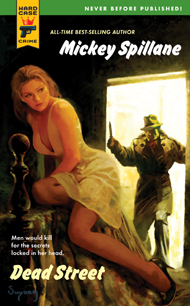
New Mickey Spillane Novel--Dead Street

Hard Case Crime has announced a new, never before published Mickey Spillane novel titled Dead Street. It will be released in November, 2007. Mickey died in July, 2006 and according to Hard Case Crime editor Charles Ardai he left one completed crime novel--Dead Street--and several strands of unfinished Mike Hammer novels. Rumor has it Max Allan Collins has been hired by Spillane's estate to finish the Mike Hammer novels.

Spillane was the bestselling author of the Twentieth century--yes children, he even out sold Stephen King--and he is best known for his hardboiled Mike Hammer novels, which were made into a myriad of films and televsion series'. None of them very good.

I have never been a huge fan of the Hammer novels--they are just a bit too hard boiled for my taste, but I have to admit I am excited for Dead Street to make it to my local bookstore. The Hard Case Crime website description is:

For 20 years, former NYPD cop Jack Stang has lived with the memory of his girlfriend’s death in an attempted abduction. But what if she weren’t actually dead? What if she somehow secretly survived—but lost her sight, and her memory, and everything else she had...except her enemies?

Cool, eh? At least the cover art is.

Click Here to visit the Hard Case publicity site.
Click Here to read The Guardian's obituary of Mickey Spillane.

Friday, January 26, 2007

The World's Most Dangerous Bookstore

I've been meaning to link to this story on Bookgasm for several days, but alas I keep neglecting my duty. Apperantly there is a bookstore in OKC, Oklahoma that defies description--books stacked helter-skelter, magazines strewn around like wall-paper and a general disorder that can only be imagined. The story is longer than most blog posts, but it's worth the read. The pictures are great to. (It actually reminds me of my office, just a little.)

Go Here to read the article at Bookgasm.

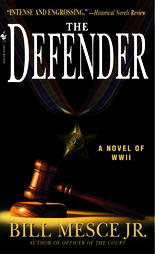
The Defender by Bill Mesce, Jr.

This nifty little legal thriller is advertised as “a novel of Word War II,” and it doesn’t disappoint as either a historical novel or a legal thriller. Lieutenant Dominick Sisko has been charged with disobeying an order and cowardice. Sisko took his unit off the offensive and retreated down hill 399 against the order of a senior officer. His defense? The commanding officer, killed in the offensive, gave him the order to retreat.

Lieutenant Colonel Harry Voss, a family friend to Sisko, is called in by the Judge Advocate General to act as the defense. The court martial is rushed, and Voss finds himself running against the clock, the prosecutor and the truth. The story is more than it seems, and Voss is uncomfortable with both the over zealous attitude of the prosecutor and the facts of the case. The characters all have divergent motives, and Voss is faced with more than just a normal defense. He his faced with his own conscience.

The Defender is a fast-paced, and thrilling novel. Mesce’s writing shines in the courtroom scenes—the dialogue is crisp, realistic and the story his characters testify is engrossing. The characters have the feel of realism without an overbearing reliance on description and back-story. The setting is well drawn with tight, understated images. The Defender is a winner, and I enjoyed every page.

Wednesday, January 24, 2007

Mr. Monk and the Blue Flu by Lee Goldberg

I’m a snob. You may have noticed, or maybe not, but it’s true: I’m a snob. I have always had an attitude of superiority about tie-in novels. They couldn’t be any good. No, really. They have to be crap, because a real writer wouldn’t take characters created by someone else and write a quality story because if they, the writer, were any good they would be writing their own damn stories. Not something a publisher hired them to essentially ghost write, right?

Well, I was wrong. Dead wrong. I just finished reading Lee Goldberg’s Mr. Monk and the Blue Flu, and I enjoyed every minute. It is based on the USA Network’s television series Monk, and it captures the tone of the series, the rhythm, the dialogue, the humor, the flair, and the characters beautifully. It is an episode of Monk, only longer, more insightful and a helluva lot of fun.

The novel begins as any ordinary day for Monk: a murder scene complete with Captain Stottlemeyer, Lieutenant Disher and Natalie, but everything in Monk’s world is about to change. The city of San Francisco and the police department are in contract negotiations, and when they fail the police force is ravaged with a case of the blue flu.

That is, the police force generally, and the detectives particularly, call in sick as a protest against the failing negotiations. Monk is called back into active duty. He gets his badge back, and promoted to Captain over a rag-tag team of former detectives. They are scabs, but each of them wants to finish their careers with one more victory and a shot at dignity. The scary thing is, Monk is the sanest of the crew. There is an ancient detective suffering from dementia, a paranoid schizophrenic, and a Dirty Harry-type who has serious anger issues. Add a serial killer, a few seemingly random murders and Monk is in way over his head.

Mr. Monk and the Blue Flu is a triumph. Lee Goldberg has transformed great television into a wonderfully humorous and rewarding novel. No one does a whodunit like Monk, and Lee Goldberg captures everything I love about the television series. The mystery is solid and intriguing, the humor is top-notch, and the characters are perfect. If you enjoy a good laugh, an enjoyable mystery, or just a great read, Mr. Monk and the Blue Flu is your bag.

Tuesday, January 23, 2007

Mack Bolan Website

I stumbled across a pretty cool website this afternoon while I was avoiding a textbook--Operations Management. Oy! It really is as boring as it sounds. Anyway, I found a great site dedicated to The Executioner series created by Don Pendleton. I read these books voraciously as a teenager, and while I haven't read one in a few years, this site made me think I should pull one off the bookshelf.

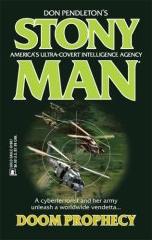
They have a complete listing of titles and authors for The Mack Bolan related lines--Able Team, Phoenix Force, Super Bolan, etc. They even have a rating system set up where readers can rate and review their favorite titles--as of now, Doom Prophecy written by Douglas P. Wojtowicz and Eternal Triangle written by Mike Newton are in the lead with a respectful 9.73 rating. Cool.

Plus, now I know who really wrote that sucker! Super cool.

The site: MackBolan.com
Or, go Here to click straight through.

Friday, January 19, 2007

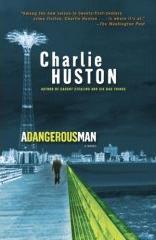
A Dangerous Man by Charlie Huston

It’s no secret I’m a big—hell, giant—fan of the work of Charlie Huston, especially his crime fiction. Does he write anything else? And I finally—finally!—read the final novel in his Hank Thompson trilogy, A Dangerous Man.

A Dangerous Man begins where Six Bad Things left off—Hank is working for the Russian mafia trying to pay off his debt. The four million dollars he stole is long gone, and his life has gone to shit. He doesn’t recognize the face in the mirror—literally—and the things he does to stay alive haunt him. The violence, the pain, and the death have caught up with Hank. He doesn’t have the energy, or the desire to keep going. He wants everything to end.

Charlie Huston is the future of crime fiction. His novels are well-plotted, adept and always edgy. They touch a nerve with solid, high impact prose, sharp dialogue and an overwhelming sense of place and time. They capture the culture with a snapshot of impotent, raw rage. The city streets are heartless, mean and cruel, yet Huston finds the soft, tender underbelly of the characters he writes. He makes them human. He makes you like them, all of them, from good to bad.

A Dangerous Man starts a little more slowly than the first two Thompson novels, but by page 50 it rockets out of the garage. The plot twists are unexpected and the writing, as always, is dark, literate and very entertaining. I loved this novel, and I can’t wait to see more crime novels from Charlie Huston. I’m just sad Hank Thompson won’t be in them.

2007 Edgar Nominations Announced

Mystery Writer’s of America has announced its 2007 Edgar Allan Poe nominations. The sad thing is, I haven’t read even one of them. Damn. I better get busy. On the good side, I did happen to see a few of the movies. Does that count?

Anyway, you know the drill. Picture your favorite celebrity on stage—fully clothed or not—drum roll please, and…

Best Novel

The Pale Blue Eye by Louis Bayard (HarperCollins)
The Janissary Tree by Jason Goodwin (Farrar, Straus and Giroux)
Gentleman and Players by Joanne Harris (HarperCollins – William Morrow)
The Dead Hour by Denise Mina (Hachette Book Group - Little, Brown and Company)
The Virgin of Small Plains by Nancy Pickard (Random House – Ballantine Books)
The Liberation Movements by Olen Steinhauer (St. Martin's Minotaur)

Best Novel by an American Author

The Faithful Spy by Alex Berenson (Random House)
Sharp Objects by Gillian Flynn (Crown - Shaye Areheart Books)
King of Lies by John Hart (St. Martin's Minotaur – Thomas Dunne Books)
Holmes on the Range by Steve Hockensmith (St. Martin's Minotaur)
A Field of Darkness by Cornelia Read (Warner Books – Mysterious Press)

Best Paperback Original

The Goodbye Kiss by Massimo Carlotto (Europa Editions)
The Open Curtain by Brian Evenson (Coffee House Press)
Snakeskin Shamisen by Naomi Hirahara (Bantam Dell Publishing – Delta Books)
The Deep Blue Alibi by Paul Levine (Bantam Dell Publishing – Bantam Books)
City of Tiny Lights by Patrick Neate (Penguin Group – Riverhead Books)

Best Fact Crime

Strange Piece of Paradise by Terri Jentz (Farrar, Straus & Giroux)
A Death in Belmont by Sebastian Junger (W.W. Norton and Co.)
Finding Amy: A True Story of Murder in Maine by Capt. Joseph K. Loughlin & Kate Clark Flora (University Press of New England)
Ripperology: A Study of the World's First Serial Killer by Robin Odell (The Kent State University Press)
The Beautiful Cigar Girl: Mary Rogers, Edgar Allan Poe and the Invention of Murder by Daniel Stashower (Dutton)
Manhunt: The 12-Day Chase for Lincoln's Killer by James L. Swanson (HarperCollins – William Morrow)

Best Television Episode Teleplay

The Closer – "Blue Blood", Teleplay by James Duff & Mike Berchem (Turner Network Television)
Dexter – "Crocodile", Teleplay by Clyde Phillips (Showtime)
House – "Clueless", Teleplay by Thomas L. Moran (Fox/NBC Universal)
Life on Mars – Episode 1, Teleplay by Matthew Graham (BBC America)
Monk – "Mr. Monk Gets a New Shrink", Teleplay by Hy Conrad (USA Network/NBC Universal)

Best Television Feature/Mini-Series Teleplay

Conviction, Teleplay by Bill Gallagher (BBC America)
Cracker: A New Terror, Teleplay by Jimmy McGovern (BBC America)
Messiah: The Harrowing, Teleplay by Terry Cafolla (BBC America)
Secret Smile, Teleplay by Kate Brooke, based on the book by Nicci French (BBC America)
The Wire, Season 4, Teleplays by Ed Burns, Kia Corthron, Dennis Lehane, David Mills, Eric Overmyer, George Pelecanos, Richard Price, David Simon & William F. Zorzi (Home Box Office)

Best Motion Picture Screenplay

Casino Royale, Screenplay by Neal Purvis, Robert Wade & Paul Haggis, based on novel by Ian Fleming (MGM)
Children of Men, Screenplay by Alfonso Cuarón, Timothy J. Sexton, David Arata, Mark Fergus & Hawk Ostby, based on a novel by P.D. James (Universal Pictures
The Departed, Screenplay by William Monahan (Warner Bros. Pictures)
The Good Shepherd, Teleplay by Eric Roth (Universal Pictures)
Notes on a Scandal, Screenplay by Patrick Marber (Scott Rudin Productions)

Tuesday, January 16, 2007

Copp for Hire by Don Pendleton

I was in junior high the first time I stumbled across Don Pendleton's Joe Copp series. I was a fan of his The Executioner novels--what junior high kid wasn't?--and when I bumped into Copp for Hire at my local library I gave it a try. I wasn't disappointed. Joe Copp is the kind of private eye hero who sprouted from the western tradition. He is a loner who resides on the fringes of society. A sad, noble man who exists more as a care-taker to society than a member of society. An American cultural icon, really. A John Wayne character personified, or any other cliche you want to throw in. He, the protagonist, needs society, but society needs him even more.

What's the point? I re-read Copp for Hire over the holidays, and I loved every minute of it. I had forgotten how heavy-handed Pendleton's portrayal of Copp was: I might as well tell you right up front. I'm a hardcase, and everyone I've ever dealt with knows it. A couple times I felt an urge to tell Copp to shut up about how damn-terrific tough he is, and get on with the story, but somehow I couldn't. It would be like telling Travis McGee to stop fucking the wounded birds. It's just part of who he is.

There's nothing really special about Copp for Hire, other than it is a brutal, fast and eventful read. If you haven't tried any of the Copp novels, try one. You won't regret it. And if you do regret it, don't come crying to me. You may not know it, but I'm a hardcase. I've always been a hardcase. Don't push me, because I'll push back.

Thursday, January 11, 2007

David Beckham Signs with the Los Angeles Galaxy

You probably don't give a ratchet, but the world's most recognizable soccer player--midfielder David Beckham--has signed a multi-year contract to finish his career in MLS. Los Angeles, to be exact. This is exciting for not only Galaxy fans, but fans of U.S. soccer in general. This is--by far--the largest acquisition for a Major League Soccer franchise, and helps the league in multple ways: 1) just think of the cool marketing this will give the league (people who know nothing about soccer knows the name Beckham); 2) the league just got a truck load of hand delivered credibility; and 3) Damn, I get to see Beckham play here in Salt Lake next season, and more than once.

Okay, so he was in town last August with Real Madrid for a warm-up, but next summer he'll be here for real--I only hope Real Salt Lake with their top-notch front-line can kick the crud out of him and the Galaxy.

Welcome to MLS Mr. Beckham. We're glad to have you.

Tuesday, January 09, 2007

No Dominion by Charlie Huston

Okay, I've been just a bit behind around here lately, but I'm doing my best to catch-up, and this post certainly won't help. I just wanted to brag. I received my review copy of Charlie Huston's latest Joe Pitt novel--the vampire P.I. who has more in common with Travis McGee and Mike Hammer than Lastat. It's titled No Dominion, and received a starred review from the venerable Publisher's Weekly. So it's probably pretty great, but you'll have to come back to read just how truly great it is--give me a week or two, and then SFReader a little longer.

Damn. I can't wait.

Monday, January 08, 2007

An SFReader Review You May Have Missed--Chasing the Roswell Alien

Last semester was a serious wanker, and as you know I got lazy with the blog, and so there were a few reviews I published with SFReader, but neglected to tell you folks about. Over the next week or so I'll get them online and let you scan a look, or you can always just go to SFReader and take a gander.

The first was a humorous, well-plotted novel about the alleged crash at Roswell, New Mexico written by Glenn Marcel titled Chasing the Roswell Alien. It is everything a story should be: funny, eerie, and dead on the mark. The author is a nephew to Jesse Marcel--the Roswell intelligence officer who broke the story in the early-Eighties--and the story has the feel of an insider. I highly recommend it. Go Here to read the review.

I recently read Marcel's Chasing Elvis for SFReader, and while it wasn't quite as good as Roswell it was a hoot--the opening scene finds Elvis--five years after his death--robbing a bank; a job he is more than just ill-fitted for. I'll let you know when the review hits the ether.

Tuesday, January 02, 2007

A Eulogy to UPN

Where have you been, I imagine you're asking--UPNs been gone for several months, maybe more. Well, I've been busy, okay? And, better late than never--or so my Ma' always told me. Usually as she was giving me a late birthday present, which really was better late than never.

My girl and I have, over the past year or so, discovered television on DVDs--our local library has the world's largest collection of DVDs in general, and television programs in particular. We have watched The Shield, Deadwood, Wings, The Twilight Zone, The Rockford Files, Dawson's Creek, Veronica Mars, and a load of other old and new television series's. It's amazing just how much better they are without commercials--I actually like television again. Whew--I never thought I'd say that!

All this viewing has made me think of a few classic UPN programs: 1) Nowhere Man; 2) The Sentinel. In UPN's early days they made a few pretty damn good programs. Unfortunately they decided urban comedy was their future--about the same time The WB decided urban comedy wasn't big enough for them--and overnight they changed their format and all the creative dramas they fostered were gone. A case in point is the fun, maddening and super cool adventure series Nowhere Man. My girl gave me this series for Christmas last year--2005, for those who are easily confused--and we watched all twenty-five episodes in a matter of weeks. Bruce Greenwood is perfect as Tom Veil--he does confusion and desperation to an art form. It takes a look at identity, humanity and how easily either, or both can be fractured and altered into something nearly unrecognizable. It was created as an homage to the old British televison series The Prisoner, and it succeeded--unfortunately it was canceled after only one season. (I'm still waiting for the release of the secretly produced second and third seasons--cross your fingers for me.)

The Sentinel found a larger audience and a longer run than Nowhere Man, but it was no less fun. It features super-hero-type Detective Jim Ellison and his super-funky sidekick Blair Sandburg. Ellison is the sentinel, which esentially means he has hyperactive senses--he hears, sees, and smells better than the rest of us, and uses all of these, and more keeping the good people of Cascade safe from the hard side. The Sentinel is campy, fun and oh so entertaining. Season one is available on DVD, and I can't wait until they release season two, and beyond.

I really enjoyed UPN in its early days, and I wish for its merger with The WB to be successful--afterall we still have Veronica Mars to look forward to. It's too bad it will be UPNs last good drama. Good luck to The CW. May they give better and better programming--give the crummy wrestling and unlaughable comedies a break and go back to UPN's roots. How about a The Sentinel reuinion. I bet Blair is sitting at home waiting for the phone to ring. Ring. Ring!

Sunday, December 24, 2006

Scavenger by David Morrell

The artwork for David Morrell's latest novel Scavenger has finally been released. (See right.) It is an extension of Creepers, and it is getting rave reviews. I'm hoping SFReader gets a review copy, and soon. Booklist gave it a starred review, and in part said, "Morrell has a reputation for smart, tightly written, genre-bending fiction, but here he exceeds himself, producing a superbly entertaining novel that will attract readers from multiple genres."

It's release date is March 30, 2007. It's publisher: CDS. Damn, I can't wait.

Wednesday, December 20, 2006

The Best of 2006

I know you have been waiting all year to read my best of 2006 list, and so to satisfy your hunger, here it is. But first, a few remarks: 1) These titles weren't necessarily published in 2006, but rather I read them in 2006; 2) I tend to re-read some of my favorite authors / titles, and to keep the list fair, a book has to be new to me to be included; 3) I completed fifty books this year, down from 77 last year, and 75 the previous year--a slump, or am I just busy? The latter, I think.

Drum roll, please. And picture your favorite celeb at the podium in their best dress / tuxedo with a modest smile and outrageously expensive haircut. Ready? Here goes. (They are listed in descending order, and order in this case does matter.)

5) Tyrannosaur Canyon by Douglas Preston. This was a two day wonder. I opened, I read and I damn near couldn't put it down. Damn sleep, damn school, damn work. Preston is best known for his collaboration with Lincoln Child, but Tyrannosaur Canyon is all Preston, and I liked it as well, and better than most, of his collaborations. The action is swift, the characters are likeable, and the story is sharp. I was disappointed when this one ended.

4) Caught Stealing by Charlie Huston. This is the first installment of Huston's Hank Thompson trilogy, and it rocks. If you want cool, Huston writes it. If you want adventure, crime, violence, scary-as-shit suspense, Huston writes that, too. Start at the beginning, and read them all.

3) The Narrows by Alexander C. Irvine. I read this one for SFReader, and I loved every minute of it. It is an urban fantasy / historical novel set in World War 2 Detroit. Irvine's descriptions of the city feel so real you can almost hear the slightly disgruntled baseball fans watching the Tigers lose again and again, and even better you can damn near smell the hot dogs and beer. If you like historical novels, fantasy, or just great story-telling read this book.

2) An Obituary for Major Reno by Richard S. Wheeler. I read this book in January, but its images of a haunted Major Reno and his role at the battle of the Little Bighorn is still fresh in my mind. Wheeler takes the much maligned Major Reno and gives him a face, a life, and allows the reader to observe the man as a man, rather than a scape-goat. Richard Wheeler is a master of the western story, and this book very well may be his masterpiece.

1) The Crimes of Jordan Wise by Bill Pronzini. Pronzini is a master of the mystery, and while his Nameless Detective series is terrific, I always look forward to his stand alone novels because they have an atmosphere and tension that set them apart from his series books. The Crimes of Jordan Wise is part crime novel and part philosophy. The action is there, the atmosphere is sharp and haunting, but the story peels away to reveal something far deeper. My only wish is that more people read Pronzini. And he wrote several dozen a year.

Well, there you have it. For better or worse, was it worth the wait?

Monday, December 18, 2006

I'm Baaaaaack!

You may have noticed, or not, that my blog has been sadly desolate the past few months, but I'm back now. I think. I finished finals last week on one of the most intensely rigorous semesters of my college career and now, for another two-plus weeks, I'm free. Wooohooo!

I can't guarantee anything, but I'll try to get several posts online and in the ether over the next several weeks, and hopefully keep it up once spring semester brings more pain and demands into my life. Happy reading.

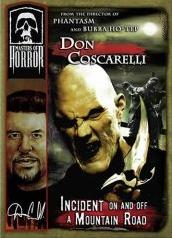
Masters of Horror--Incident On and Off a Mountain Road

Masters of Horror -- Incident On and Off a Mountain Road

I recently discovered--or more aptly put, remembered--the Showtime series Masters of Horror. I know nothing about the actual series, other than it was created and is produced by Mick Garris, and airs on Showtime; I'm one the remaining three or four dozen people without a cable or satellite connection in my home. (It's expensive, and hell, it leaves me more time to read.)

I have, however, been watching the individual episodes as they are released on DVD, and while the series is a little uneven, a few of the episodes have been terrific. One such episode is, Incident On and Off a Mountain Road. Incident is based on a short story written by Joe R. Landsdale and directed by Don Coscarelli, who also directed the wonderful Bubba Ho-Tep starring Bruce Campbell, which also just happens to be based on a Joe Landsdale story.

Incident is a tour-de-force horror film. It is part slasher, part psychological thriller, and completely and outlandishly entertaining. The cinematography is beautiful, the acting is better than competent, and the direction is great. Incident On and Off a Mountain Road is very nearly the perfect horror film--its length, at just under an hour, is ideal for the story, and the story is told with a sharpness and style that slasher films rarely exhibit. While I have never read the Landsdale short story on which Incident was based, I can only bet the film served its interpretation well, and I hope, oh how I hope, to see Coscarelli and Landsdale team-up again. Rumor has it, they are in the process of putting together a sequel to Bubba Ho-Tep.
While the DVD-version of Incident On and Off a Mountain Road is a little overpriced at $16.98, you should make an effort to find it in a library or at your local video store. It's well worth the rental fee. At least, I think it is.

Thursday, September 21, 2006

Charles Grant Dead of a Heart Attack

Bad news this evening. Charles Grant, author of dozens of novels in the horror and fantasy genres, died of a heart attack on September 15--nearly a week ago. I just found out this evening. He had been seriously ill for a few years, and apperantly it finally caught him. May he rest in peace. According to a few accounts he died while watching a baseball game on television at home--not a bad way to go.

I first discovered the work of Charles Grant in the mid-Nineties when I picked up his novel Jackals--a twisted little story about a family of mutant highwaymen. I loved it, and I read several more of his novels including his Dark Symphony trilogy, and one of his Black Oak novels. I haven't read much of Grant, but what I have, was damn good. Maybe I'll dig one of his books out of storage and read it. In a way, if his work lives on, so does he.

I don't know about you all, but his work will be missed, and I wish the best for his family. To read a short article about Charles Grant on Scifi.com go Here.

Go Here to read a great little article / bio of Charles Grant--it includes an exhaustive bibliography of his work (both novels and short stories).

Friday, September 15, 2006

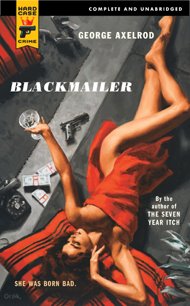
New Hard Case Crime Artwork--Blackmailer

Hmmm. Hard Case just announced another title, and released the cover art. The title: Blackmailer. The author: George Axelrod (screen writer for Breakfast at Tiffany's and The Manchurian Candidate). Release date: June 2007. The artist: Glenn Orbik (he did the art for The Branded Woman and Colorado Kid--needless to say it is great!)

This is a title I am looking forward to. (Still, I'm wishing for more original HCC releases, but this one does sound good.) Go Here to read the marketing info on HCC's website.

Tuesday, September 12, 2006

Noel Hynd Interview

I discovered an amazing novel in the winter of 1991. One evening, probably a Saturday evening, I stumbled across the novel, Truman's Spy by Noel Hynd. It was a thriller involving an FBI agent, an American capitalist, the KGB, and Hollywood. It is plotted quickly--though not so quickly that it always feels like you are missing something (like the junk-thrillers being turned out today)--but with a literary flare that makes it substantial and provocative.

I dug out my copy over the weekend and started to read it again. It is as good as I remember, and it made me wonder about Noel Hynd. He switched to writing horror novels a few years after Truman's Spy was released and I lost track of him. In my search for what he has been writing over the past several years I stumbled across an interview. It is dated--1999, but still it is good fun, almost like running into an old friend. Go Here to read the interview.

Friday, September 01, 2006

Richard Matheson Interview

There is a terrific interview of Richard Matheson at Mystery File conducted by Ed Gorman. Gorman starts the thing with a brief overview of Matheson as a writer, and his (Ed Gorman's) first experience with a Matheson novel as young teenager--it, like most of Ed Gorman's fiction, is sweet, melancholy and very fondly remembered. The interview is great--Matheson, at times, comes across as grumpy, but he is a fascinating as he looks back at the old days of television, film and pulp writing. It is fascinating and very well worth the read. Go Here to read the interview.

Saturday, August 26, 2006

The Crimes of Jordan Wise by Bill Pronzini

Bill Pronzini is best known for his spectacular Nameless Detective series, but his stand alone work more than holds its own. In fact, I look forward to his non-series books because they have a similar atmosphere and style of the old noir novels, but they are anything but cheap copies--they are unique, sparse yet heavy with meaning and melancholy, and all Pronzini.

The Crimes of Jordan Wise is a nifty thriller with an anti-hero who has committed three perfect crimes in his life, and as his life draws to a close he wants to share the story. Pronzini is an old hand at plotting and you can tell--there is nothing out of place; no missing segments, and nothing left hanging. The prose is simple, almost haunting in a melancholy way, and easily disguises the complexity of the story: the layers peel away to reveal something deep and meaningful. It says something about life, friendship, love, all while navigating the darkness that burrows its way into the human soul. The Crimes of Jordan Wise is sad, gritty and dark, at times sweet and tender, and always entertaining.
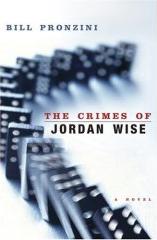
Bill Pronzini, particularly his stand alone novels, deserves a larger audience than he has. His writing yearns back to the old days, but his style, talent and voice are uniquely his own. The Crimes of Jordan Wise is, if not the best, one of the best novels I have read this year.

Friday, August 18, 2006

Mirror Lake Highway

Okay, I have been meaning to write this post for nearly two weeks, but alas it just hasn't happened. Well, it is happening now, I promise you. A few weekends back my girl--sexy and intelligent she is--her parents and I went for a day trip into the Uinta Mountains. While, as expected, it was beautiful, cool (somewhere in the mid-seventies) and fun it was also a much needed break from finals, work, the valley, and the heat.


Nature exists for one reason: To remind us of how simple life really is. It is about love, simplicity and reliance. The love and kindness we should extend to our families, neighbors and all living creatures. The simplicity of life: food, shelter, wonder and awe. The reliance we all have on each other.

I traveled the hills of the Uinta National Forest as a boy with my father and brother, a pack on my back and a few blisters on my feet. It feels very much like home when I broach its interior--it is more crowded, less peaceful than it was, but still it is a place of great wonder and awe.

I love the Uintas and hope our society continues to recognize the beauty of land and place so these wild places can remain intact. They are truly a treasure and if we don't protect them they will be beaten down and destroyed.

Everybody Kills Somebody Sometime by Robert J. Randisi

Good news. Robert Randisi has a new novel coming to a bookstore near you this Halloween--Oct. 31 for the mentally stunted out there. It is the first, of at least two, "Rat Pack" novels featuring, who else, but the rat pack? The Publisher's Weekly review is excellent--"Randisi (Arch Angels) provides a snazzy snapshot of a mythic 1960 Las Vegas in this enjoyable first of a new series."

I'm excited for a new Randisi for a few reasons, the most prominent is: I like this guy when he is writing well. I have been a shade disappointed with his recent output, with the exception of Cold Blooded, and I hope Everybody Kills Somebody Sometime represents the return of Bob Randisi to the form he held in his early Joe Keough novels.

Thursday, August 17, 2006

New Hard Case Crime Artwork--The Wounded and the Slain

New today! I just received an email from the fine people at Hard Case--Charles Ardai to be exact, or maybe his secretary. Who knows? They have just released the cover art (see right) for their upcoming David Goodis novel, The Wounded and the Slain. This title won't be on bookshelves until May, 2007, but it definitely is something to look forward to.

The next title coming from Hard Case Crime, the first week of September, is Pete Hamill's The Guns of Heaven. I thought this baby was an original HCC title, but alas, no. It was originally published some twenty years ago and HCC is bringing it back into print.

I love Hard Case Crime. The idea, the books, and the covers, but I have been disappointed with a few of the reprint titles--the Donald Hamilton title, the David Dodge title, and a few others. It's not that I didn't like them, but rather they didn't speak to me. My reaction was, "Hmm...well, at least I can add it to my books-read list." Not a great recommendation.

On the other hand I have absolutely loved all of their original novels--especially Kiss Her Goodbye by Allan Guthrie, and The Confession by Domenic Stansberry. They are of my generation, and they say something that I am waiting to hear--I empathize with the characters more, enjoy the excitement more, and just basically like them better--on the whole--than the reprints. So, needless to say, I am disappointed that The Guns of Heaven is a reprint.

If you are out there Charles Ardai, acquire more original novels--maybe a Bill Pronzini title, an Ed Gorman, another Stansberry, or Guthrie. Anything new. Please. I'll buy it, I promise.

Wednesday, August 09, 2006

The Covers of Harry Whittington

Bill Crider, paperback collector and mystery / western writer, has put together a slideshow of his Harry Whittington collection. The covers are wild and vivid. Whittington has been called the king of the paperback, and when you see this impressive show, you will know why. Check the show out Here. I have about seven of these titles--boy, would I be willing to trade for Crider's lot.

There is also a slideshow of John D's paperbacks Here.

Monday, August 07, 2006

A Weekend of Books: John D., Ian MacAlister & .357 Vigilante

Oh boy. It's Monday evening, and I'm still smiling. This weekend I made an absolute haul at a thrift shop and a used bookstore. I found no less than two vintage John D. MacDonald novels--Dead Low Tide and The Brass Cupcake. The Brass Cupcake is a Gold Medal reprint (R2139)--the cover art has changed, for the worse, from the original (see right), while Dead Low Tide is one of those beautifully gaudy paperback editions put out by Fawcett Gold Medal in the 1970s. While I know little about Cupcake, I have heard that Dead Low Tide is a masterpiece. I can't wait to read it--them, I mean.

I also came away with Ian MacAlister's Valley of the Assassins. MacAlister is the pen name of Marvin Albert, Gold Medal writer, and all around great storyteller. He wrote four slam-bang adventure novels under the MacAlister name very reminiscent of the good, early work, of Alistair MacLean. Maybe even his pen name was influenced? To read a great article, written by Bill Crider, about Albert follow This Link to Mystery File.

The other two paperbacks I picked up are less exciting, but still--
The Executioner #26: Acapulco Rampage. I haven't read a Mack Bolan book since I was sixteen--okay, you caught me, 26--and I thougfht it was damn time I tried one again. I thought I would go back to the original though, the new stuff doesn't excite all that much.

And, .357: Vigilante by Ian Ludlow. This is the first of a series cut short (three books released) when the original Pinnacle Books went bankrupt. I've never tried one, but thought it might be time. It is the work of Lee Goldberg and Lewis Perdue. Goldberg's novel, The Man with the Iron-On Badge was selected as a finalist for an Edgar for best novel this year, and it deserved it. While Lewis Perdue is the scorned and angry author of The Da Vinci Legacy--he claims Dan Brown lifted ideas, plot points and research for his novel The Da Vinci Code. Frankly neither of the books are very good, and Lewis Perdue (his The Perfect Killer is much better) should just be thankful that Brown's success brought Legacy back into print.

Here is to all the little flea-ridden, dust enveloped shops around the world that still find space for a few old paperback books.

Friday, August 04, 2006

Lisey's Story by Stephen King

I wish I could tell you that I have been a lifelong Stephen King fan, but I can't. Now don't get me wrong, I have never read a Stephen King novel I didn't like--although there have been a few I was mildly disappointed with: Hearts in Atlantis (the first 2/3rds was awesome, the last third unfulfilled), and his endings can be a little dicky at times.

My problem with Stephen King hasn't been his work, but rather his popularity--anything as popular as he is can't possibly be any good, can it? As evidence, think about the big blockbuster films of the last several years: Independence Day, Star Wars (the new trilogy), Pearl Harbor, and the rash of really shitty comic book movies (i.e. The Hulk, Sin City, etc.) Not to mention that dog of a movie, The Return of the King.

It's not surprising that somehow, somewhere, this relationship of popular equals crummy was ingrained in my mind not as post hoc, but as truth. So, I avoided Stephen King for years--popular is bad, so Stephen king must be awful. Then one day I picked up his novel, The Stand, and I have been a fan ever since. Hell, I even liked his much maligned, The Colorado Kid. So it is with some anticipation that I await his next novel, Lisey's Story.

It's long (528 pages), do we expect anything less from King? It is about love and violence with a touch of the paranormal thown in to keep it, well, different. It is due out in October--the end of October--from Scribner in hardcover. I already have a hold on it at my local library. What, you think I can afford 28 bucks? Yeah, right.

Thursday, August 03, 2006

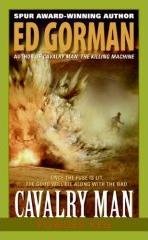
Cavalry Man: Powder Keg by Ed Gorman

Ed Gorman writes a different kind of western--the characters are softer, lonelier and much more recognizable (they feel and act like people we know) than the standard fare. And the storylines run more towards the mystery genre than the western, and Powder Keg, the second novel in his Cavarly Man series, is no exception.

Noah Ford, the decent, almost philosophical recovering alcoholic federal man, is dispatched to the small town of Willow Bend. There is a bank robber hitting all the local banks and then turning the money over to small land owners to pay their mortgages, two other federals who are more apt to break the law than keep it, and a mysterious rash of murders that will keep Ford busy trying to figure a motive, and even more busy trying to keep himself alive.

Powder Keg is a mystery disguised as a western. Sure, the setting is set in the old west--there are cattlemen, saloons, livery stables, brothels, Sheriffs, and a whole lot of horses, but that's okay. A mystery is a mystery after all. It doesn't matter where or when it's set, does it? There are also a chain of murders, soft, sweet and sincere women, tough hard-drinking men and Noah Ford with a root beer in hand.

If you enjoy a good mystery, a western, or just like good, well-told stories, Cavalry Man: Powder Keg will sit well.

Tuesday, August 01, 2006

Ghoul by Brian Keene--The Cover Art

I just ran across the cover art for the next Brian Keene novel coming out from Leisure Books--the most progressive mainstream horror publisher running. The title is: Ghoul. The release date: February, 2007.

I was disappointed with City of the Dead, and I haven't gotten to The Conqueror Worms yet--although it is still very much on my list--but I thought Keene's Terminal was one of the best dark suspense novels of 2005. It was well plotted, filled with characters that felt true, and just good damn fun. You could say I liked it. In fact, you can read my review for Terminal at SFReader by clicking Here.

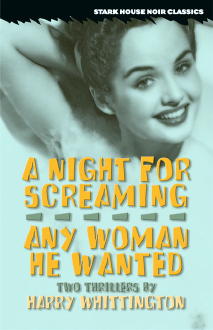
New Stark House Noir Classic Double--Harry Whittington

It's no secret I am a fan of the old crime thrillers of the 1940s, 50s and 60s--not to mention the westerns, the science fiction and just about damn near everything else written--which is why this little number excites the hell out of me for two reasons. The first, and the most obvious is: Stark House Press is scheduled to release two vintage Harry Whittington novels--A Night for Screaming and Any Woman He Wanted--this September. This release, like all the Stark House publications, is a trade paperback with great cover art and two complete and unabridged novels. The novel retails for $19.95, which brings me back to an old gripe. Where have all the inexpensive mass-market paperbacks gone? I would be much more excited if I could pick this baby up for seven or eight dollars as a mass-market. Oh well, at least Stark House is out there, operating and bringing some of these old classics back into print.

The second reason I'm excited about this news has nothing whatsoever to do with the Whittington book, but rather how I found out about it. I have talked about a website called Mystery File on this blog before--it contains loads of information about current and past mystery writers and their work including bibliographies, book cover scans, interviews, reviews as well as light intellectual inquiry into the crime and mystery genres. The good and exciting news is, Ed Gorman is back! He is no longer blogging, but he has a sporadic column ongoing at Mystery File--today's column was about Stark House's new Whittington release. So thee you have it. If you want to hear some sage advice from one of today's best mystery writers follow this trail and read a little Gorman.

Tuesday, July 25, 2006

New Sam McCain Novel by Ed Gorman

We all have a favorite writer, or two, or three, or ten--but every once in a while, if we are lucky, we find a writer that speaks to us. Not the common, "Oh, this is soo good" kind of book speak, but that "Wow, this guy is really saying something here" kind of lightening strike moment that signals a brief--all too brief--moment of understanding. To put it another way, the world--at least a very small part of it--is made plain by this writer; or something complicated and hard suddenly seems simple and very understandable.
This writer, to me, is Ed Gorman. He writes everything from dark suspense to mystery to science fiction to western, and I have never read anything he wrote that I didn't like. That's not to say I don't have favorites, because I do, and they are too numerous to post here, but among them I have to place his Sam McCain novels.

The Sam McCain mysteries are beautifully rendered portaits of small town life in the fifties and sixties spun into an entertaining, meaningful and downright fun story. There are six titles in the series: The Day the Music Died, Wake Up Little Susie, Will You Still Love Me Tomorrow, Save the Last Dance for Me, Everybody's Somebody's Fool, and Breaking Up is Hard to Do. McCain is also featured in a novella titled, "The Santa Claus Murders," which appeared in the anthology: Crooks, Crimes and Christmas. I'm actually reading this story right now, and it is vintage McCain. Fun, fast and uncomprimisingly enjoyable.

And now, drum roll please--again imagine your favorite actor / actress at the podium--the seventh title in the Sam McCain series has not only been announced, but the cover art has been released (see right). The title: Fools Rush In. The publisher: Pegasus Books. The release date: March, 2007.

Damn. Why must I always wait? Needless to say, I can't wait to get my grubby hands on this title--the last entry in the McCain saga, Breaking Up is Hard to Do, was published two long years ago. Two very long years ago.

Monday, July 24, 2006

Stansbury Island

The last several weeks have seen few, to say the least, posts here at Gravetapping. My instinct is to blame blogspot--their blog posting program has been messing about with me. I think it is a conspiracy. Although while this is a simple and somewhat accurate excuse their is another: calculus. God, how I despise that class, and I am just unfortunate enough to be taking it right this summer. Oh goody. So, anyway with that out of the way and can move on...


A few months ago my girl and and I went to Stansbury Island on the Great Salt Lake--it is a desert landscape surrounded by vast, seemingly limitless, stretches of water. There is a large heard of cattle that roams the northern end of the island, and on the southern end--which is actually attached to the surrounding desert, much like a peninsula--are several evaporation ponds, salt factories, biking and hiking trails, and a myriad of dirt roads--not to mention a few nude male sunbathers. Just don't look too close, and you'll be okay.


The island has a desolate eloquence, which gives one the impression of timelessness. It is seemingly the birthplace of our world. Ancient, and new at the same time. Everything is slowed down here: life, death, decay, and even re-birth. There is beauty. The golden hue of lazily swaggering flora. The crisp airy sky and the deep, restless water slowly moving, tapping, tapping against the brilliant whites of shoreline. There is life--mountain lions roam the in solitude along the far edges of the high back country, birds sweep across the horizon as they migrate North in the spring and South again in the autumn, rabbits bound across the flat brush covered lowlands down near the lake, and then you have the creepers and crawlers. The bugs, flys and the pesky mosquitoes. They are all here on Standsbury Island, living and dying. It is a wonderful place. A place were one can reflect on the past, the present and one's own mortality.
Saturday, July 22, 2006

Amazing Journeys Magazine

Good news, and bad too. Amazing Journeys Magazine recently published my short story "The Electric Man," and it is currently available for purchase at Clarke's World Books. Go Here to find AJM--"Electric Man" is in issue 10.

It has been well received, both my short story and the magazine as a whole. AJM is a great little digest sized (perfect bound) magazine of modern science fiction written in the classic style of the golden age. These stories will remind you of The Twilight Zone, vintage Asimov, Heinlein, and even L. Ron Hubbard. The stories are crisp, clean and very well told.

Go Here to read the Tangent review for this issue of AJM.

Now for the bad: I recently learned that Ed Knight, the hardworking editor of AJM, has called it quits after thirteen issues. He did a nearly impossible job of putting this high quality magazine together on a shoe-string budget. I'll miss AJM, but I wish all the best to Ed and hope maybe, just maybe, he'll throw his hat back into the small press magazine rink. Good luck, Ed.